As the housing industry evolves, builders and homeowners alike are rethinking traditional construction methods. One of the most important decisions in constructing a single-family home is the choice of framing material. For decades, wood has dominated residential construction in the United States. However, cold-formed steel (CFS) is rapidly gaining traction as a durable, sustainable, and now even more efficient alternative.
In this post, we’ll dive into the key differences between wood and CFS framing—and why steel might be the material of the future.
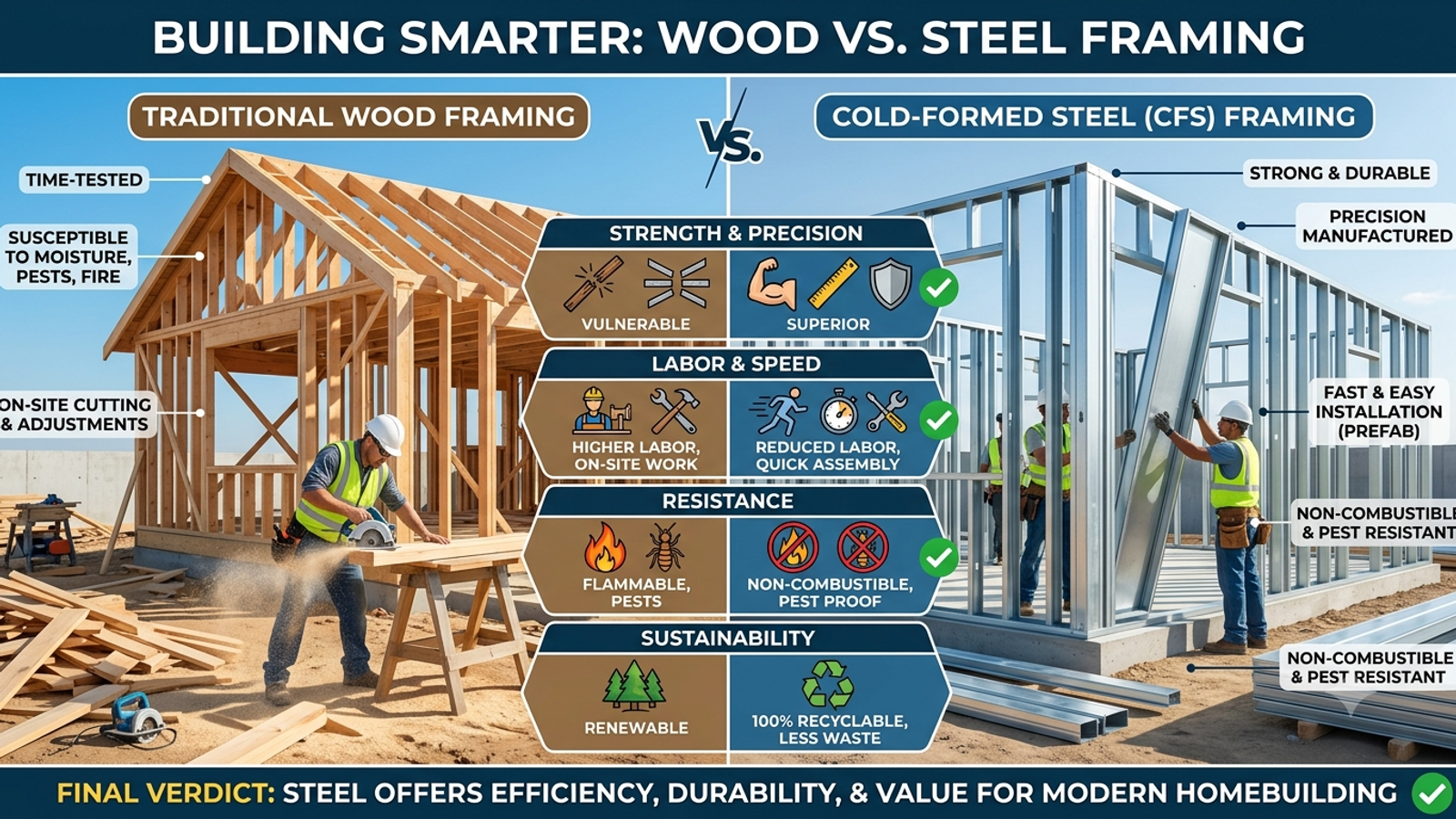
1. Strength, Durability, and Precision
Cold-Formed Steel CFS is made by rolling thin steel sheets into structural shapes at room temperature. It offers superior strength-to-weight ratios compared to wood, making it ideal for withstanding extreme weather, seismic events, and heavy loads.
- Benefits: Resistant to warping, shrinking, splitting, termites, and mold. Doesn’t burn or rot.
- Precision: Steel framing components are manufactured with tight tolerances, allowing for exact fits and reducing construction errors.
Wood Wood is a time-tested material, but it’s vulnerable to environmental damage and inconsistencies in quality.
- Drawbacks: Susceptible to moisture, pests, warping, and fire.
- Variability: Natural variations can lead to less precise framing and additional site adjustments.
✅ Winner: Steel, for both performance and precision.
2. Ease of Installation and Labor Efficiency
Cold-Formed Steel Contrary to outdated assumptions, CFS is actually faster and easier to install than wood—especially when components are pre-engineered or panelized off-site. With predictable dimensions and lighter weight per strength ratio, crews can assemble steel frames with less material waste, fewer tools, and minimal on-site modifications.
- Time Savings: Panels arrive ready to install, significantly reducing build times.
- Labor: Steel framing requires fewer people and often results in fewer callbacks due to its consistency.
- Clean Jobsite: No sawdust or wood scraps; fewer hazards and mess.
Wood Wood construction still holds advantages for small-scale custom builds or projects without access to prefab steel solutions. But traditional stick-framing is more labor-intensive, often requiring cutting, measuring, and adjusting pieces on-site.
- More On-Site Work: Cutting, trimming, and correcting for defects is standard in wood framing.
- Increased Waste: Material waste is generally higher with wood.
🔨 Winner: Steel, especially for production-scale and panelized construction. Faster, cleaner, and easier.
3. Environmental Impact
Cold-Formed Steel Steel is 100% recyclable and often made from recycled content. It produces less jobsite waste and can be precisely manufactured to reduce excess.
- Pros: Sustainable lifecycle, minimal waste.
- Cons: Energy-intensive to produce initially—but often offset by durability and recyclability.
Wood As a renewable resource, wood can be a green choice if sourced from sustainable forests. But wood waste and deforestation are concerns.
- Pros: Renewable and carbon-storing.
- Cons: Biodegradable but less durable, contributing to shorter building lifespans in some cases.
🌍 Winner: A tie—wood for renewability, steel for recyclability and waste efficiency.
4. Cost and Value
Cold-Formed Steel Upfront material costs for steel can be higher than wood, but reduced labor costs, faster build times, and durability make steel a smart long-term investment.
- Less Rework: Fewer framing issues down the line.
- Predictable Pricing: Steel prices have been more stable compared to lumber volatility.
Wood Still the cheapest up-front material, wood is widely available and familiar to most trades.
- Volatility: Lumber markets can swing drastically, impacting project costs.
- Hidden Costs: Longer labor time, more waste, and maintenance issues over the years.
💵 Winner: Steel, when considering total project cost and lifecycle value.
5. Fire and Pest Resistance
Cold-Formed Steel Naturally non-combustible, steel offers unmatched protection in fire-prone areas. It also doesn't provide a food source for termites or mold.
Wood Highly combustible and vulnerable to pest infestation without chemical treatments.
🔥 Winner: Steel, by a wide margin.
Conclusion: Building Smarter with Steel
The future of homebuilding is being shaped by climate resilience, speed, precision, and sustainability. In that landscape, cold-formed steel offers a compelling edge over traditional wood framing—particularly when it comes to installation efficiency and long-term durability.
If you're building in a wildfire zone, coastal environment, or simply want a faster, cleaner construction process, steel should be at the top of your list. The framing phase alone can save days—sometimes weeks—thanks to panelized systems and off-site fabrication.
For developers, builders, and homeowners looking to innovate, cold-formed steel isn’t just an alternative—it’s an upgrade.
Plan Your Next Step
Keep exploring Metricon Homes resources
Move from research to action with the service pages, models, and planning resources most relevant to this article.